LettuceConsumer Fintech
All-in-oneplatform forsolopreneurs
Working in an embedded manner within Lettuce, I helped evolve the product from an MVP to a more mature product by improving the UX and building core features.

The MVP proved the concept. What it hadn't solved yet was complexity. Concepts like distributions and reasonable salary are entirely new to someone running their first S-corp, and getting them wrong has real tax consequences.
The platform needed to make the right call automatically, without turning every user into their own accountant, while staying transparent the moment a decision actually needed their input.
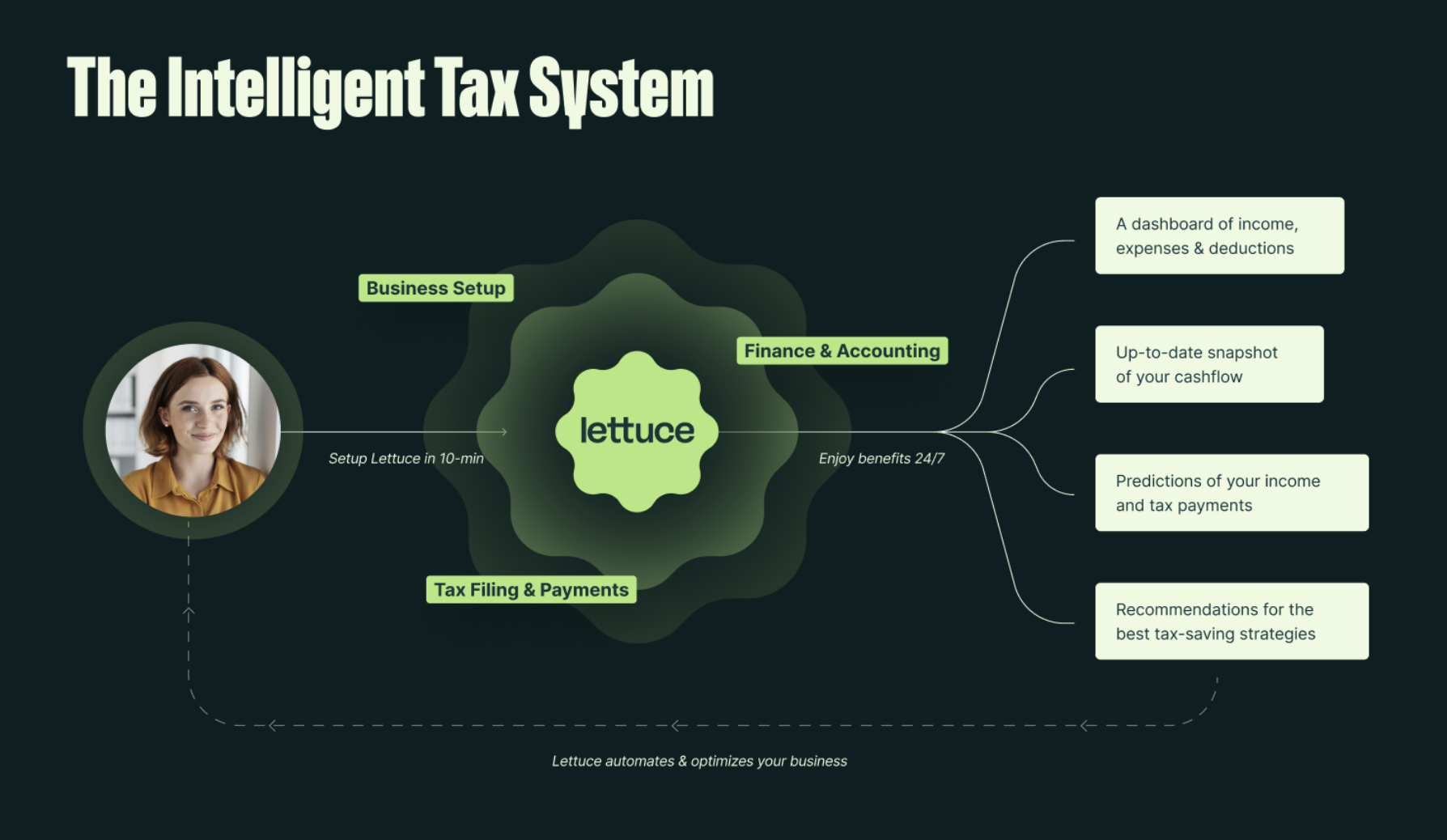
Automated the taxes.
Nobody understood them.
Running an S-corp for the first time means encountering ideas nobody explains well.The product had to carry that weight so the user didn't have to, without hiding what mattered.
Distributions and reasonable salary were new to nearly every user.
First-time S-corp owners had no prior context for these concepts, and getting them wrong risked real tax exposure.
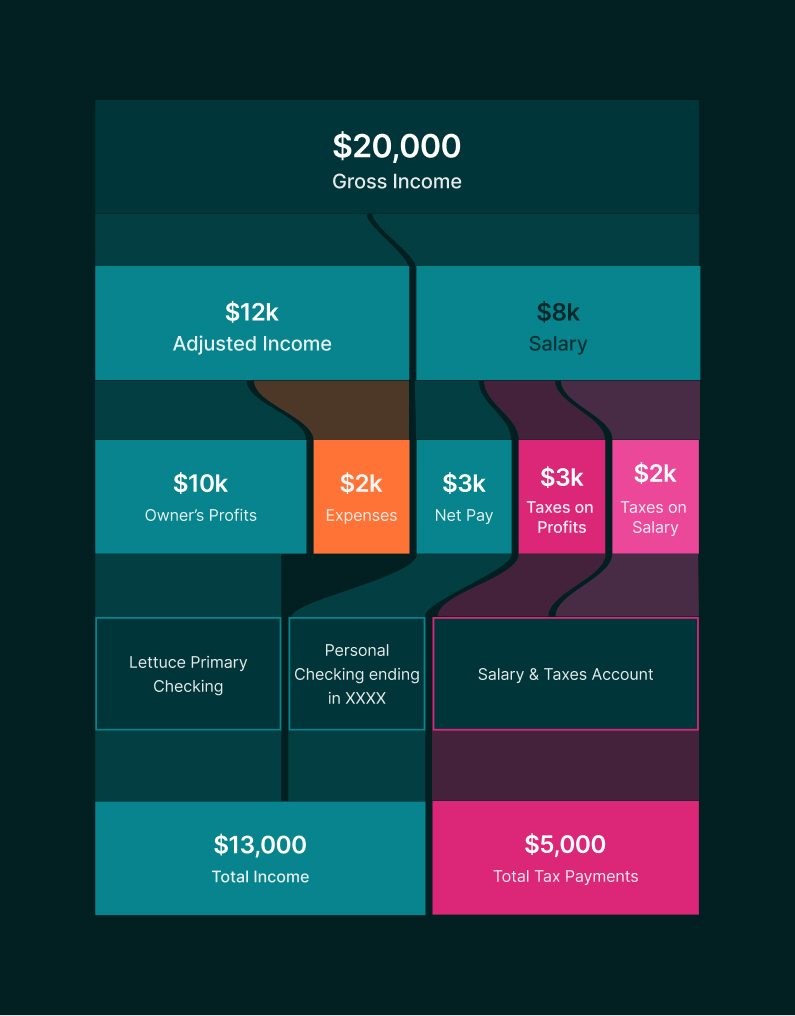
The product withheld taxes automatically, but the math was invisible.
Income comes in, gets reduced by expenses and payroll, gets taxed, and what's left is available as a distribution. Users needed to not only see how much money they can safely pay themselves as distribution, but also to understand how this was calculated in a visual, non-technical way.
The UI was too simple to show what mattered.
Key information about where money stood and why was either hard to find or missing entirely. A clean screen isn't helpful if it's clean because it left out the answer.
Automated numbers only work if users believe them.
Every dollar withheld or held back needed to feel earned, not asserted. Getting the money movement to read as clearly right, not just correct, took several rounds of design exploration.
Set it and forget it.
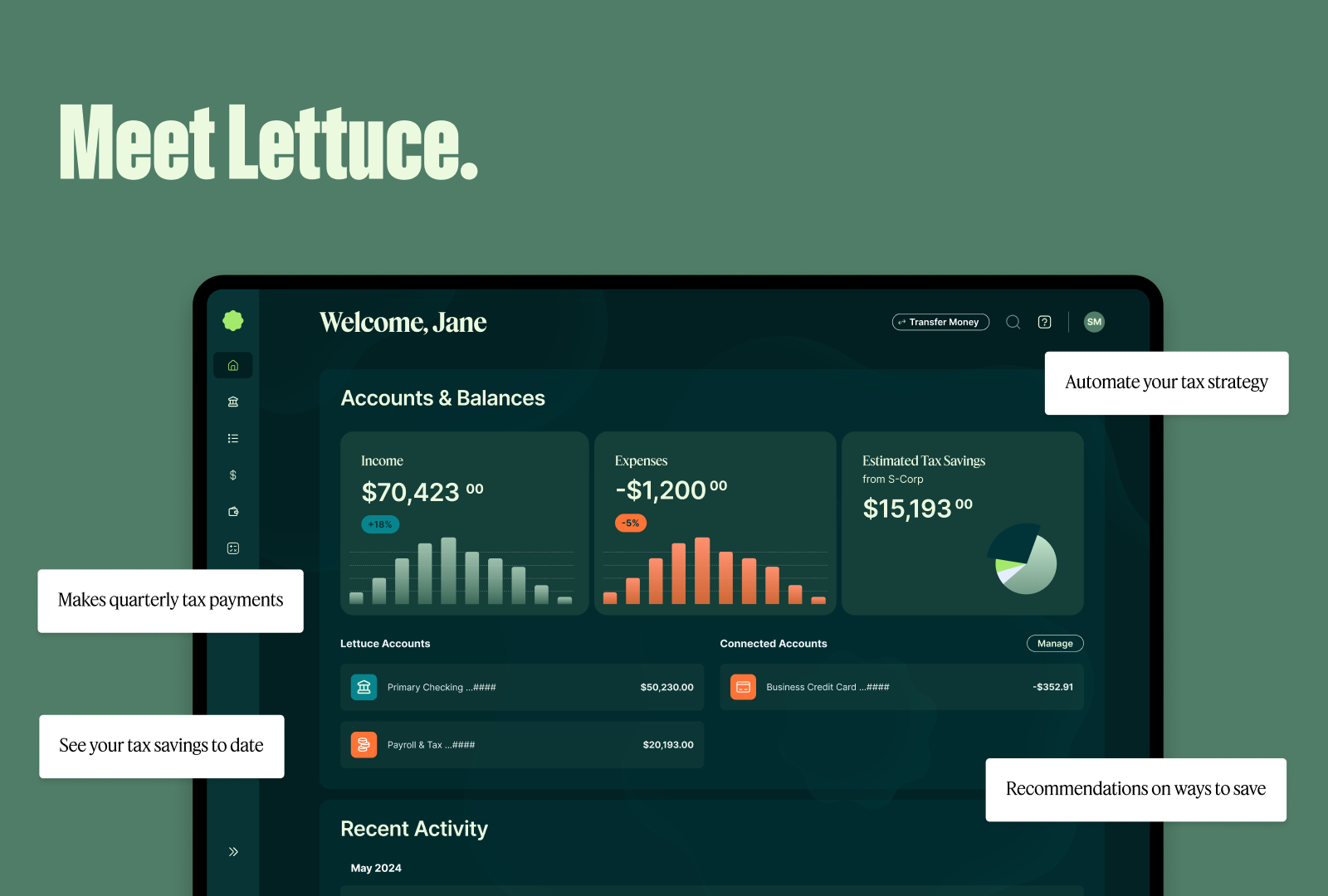
Users shouldn't need to log in unless they want to, or need to take a specific action. When they do log in, the product opens on a quick snapshot: here's where things stand, everything's in order.
Simple and unique.
The experience isn't a bigger platform with features cut down. It's built specifically for businesses of one, with a bird's-eye view that represents a solo business as it actually is, not a watered-down version of something made for a bigger company.
Insightful.
Users don't need deep financial knowledge to succeed on Lettuce. The product distills and interprets their data for them, surfacing it as clear, actionable insight and recommendations instead of raw numbers on a graph.
Opinionated, but flexible.
Lettuce makes the call on tax strategy and optimization by default. Users can always override it if they see fit, but they're never required to form their own opinion first just to get started.
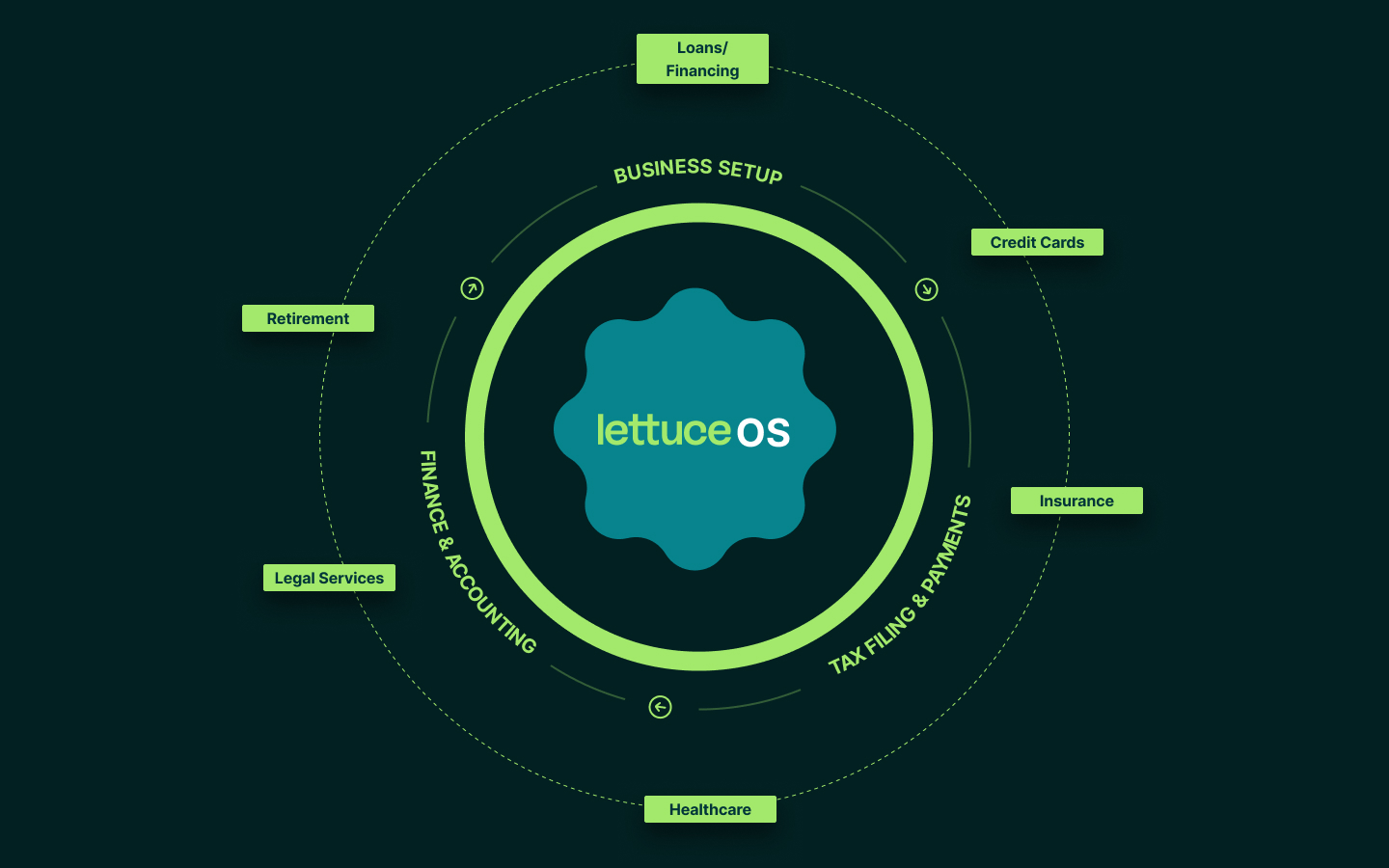
Automate the complexity.
Explain it when it counts.
Awareness and Growth
Demystifying before sign-up, not after.
- Designed a tax calculator that teaches prospects concepts like distributions and reasonable salary before they've committed
- Designed landing pages and partnership pages that framed the product's value in plain terms, not tax jargon
Core Experience
Opinionated automation, with clarity built in.
- Designed the money movement system, including distributions, built around the reasonable salary logic first-time S-corp owners had never encountered
- Designed the transaction screen, dashboard home screen, and reports page to answer “am I doing this right” at a glance
- Built tax catch-up: automates the withholding estimate, surfaces the reasoning behind it instead of just the number
- Designed Lettuce Wrapped, turning a year of automated decisions into a clear, human story of how the business actually did
Intelligence Layer
Explaining the automation, not just running it silently.
- Designed AI support, so a user could ask “why” in the moment instead of guessing
- Built an AI sidebar, surfacing context and reasoning without interrupting the task at hand
- Led visioning work on multimodal interaction, specifically voice, exploring even lower-friction ways to get an answer
Ask why.
Get an answer.
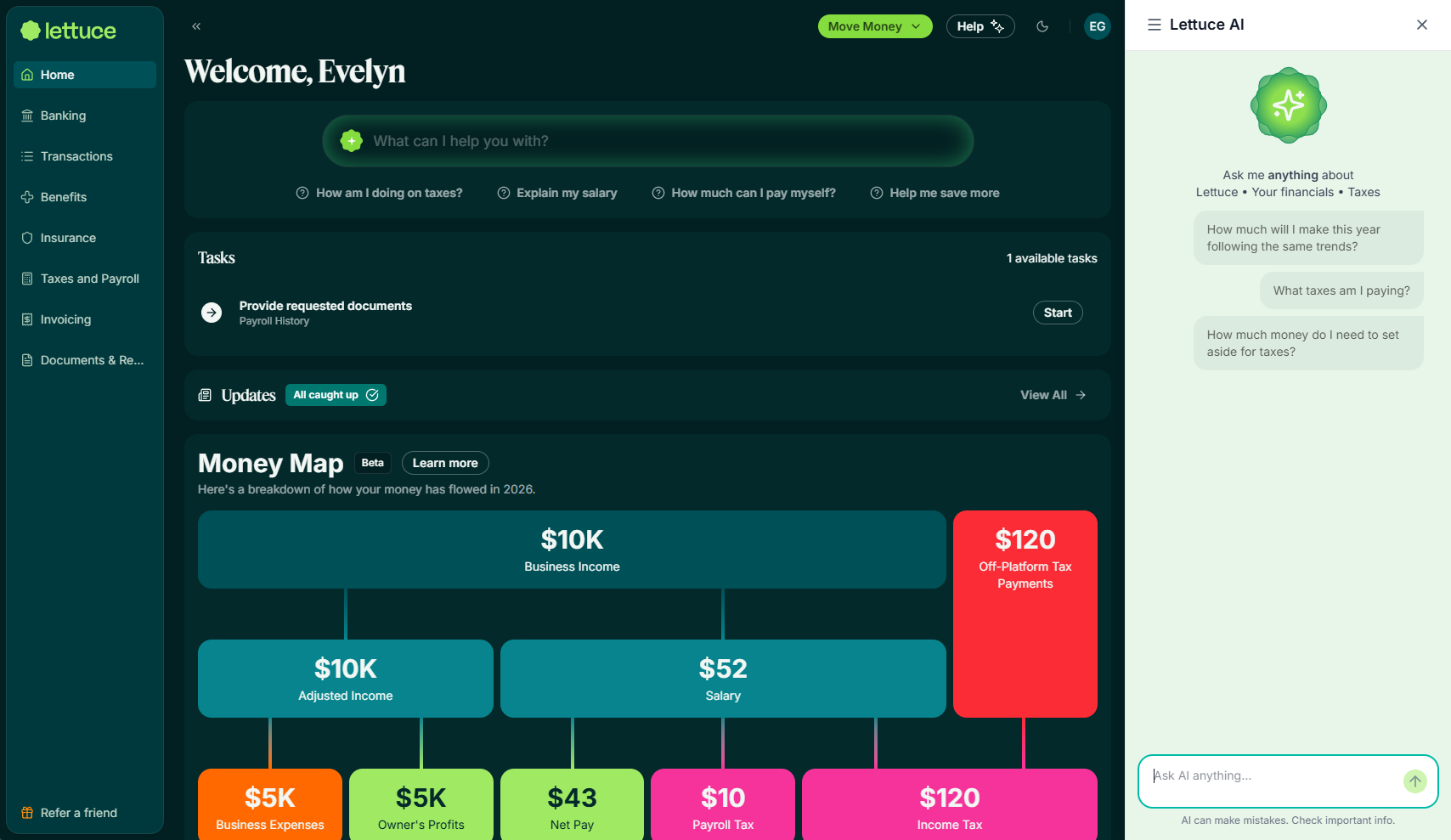
Explaining the automation, not just running it
Automation earns trust only if it can account for itself. The AI layer sits alongside the work rather than in front of it — there when a number needs justifying, out of the way when it doesn't.
- Ask Lettuce AIA prompt on the home screen, carrying the questions users actually arrive with: what will I make this year, what taxes am I paying, how much should I set aside.
- AI sidebarOpens beside the task rather than over it, so context and reasoning arrive without losing the thing you were in the middle of.
- Multimodal, and voiceVisioning work on lower-friction ways to ask, so getting an answer doesn't depend on typing the question.
What the automation
actually looks like.
Creating a more
delightful financial product.
The year, told back to them
Spotify Wrapped, for a business of one. At year end the product replays what it did on the user's behalf: how much the automation saved them, and how the business actually did. The figures were in the account all along — Wrapped is the moment they stop being a report to file and become a story worth reading.
Ways to save, dealt as cards
Every strategy a solopreneur can claim, each one its own card carrying the saving it's worth and a single switch to turn it on. Deductions are dry by nature, so the playbook leans on colour and motion to make them worth flipping through — a decision that normally needs a CPA reads as a choice with a number on it.
- Home OfficeWork happens here too. Activate business use of home and start capturing it.
- Business VehicleEvery work mile counts for something. Activate business use of vehicle to write it off.
- 401(k) ElectionPay yourself, then pay less in taxes doing it. Activate your S-corp 401(k) and start saving for later.
Sized against last year
Potential savings for the year set beside what the previous one actually returned, so the figure lands as a comparison rather than a promise.
Next case —
Your AI life coach
Aris is an AI life coach that helps people navigate decisions, habits, and growth — turning open-ended conversations into actionable next steps.